Home > National Priorities > National Summit
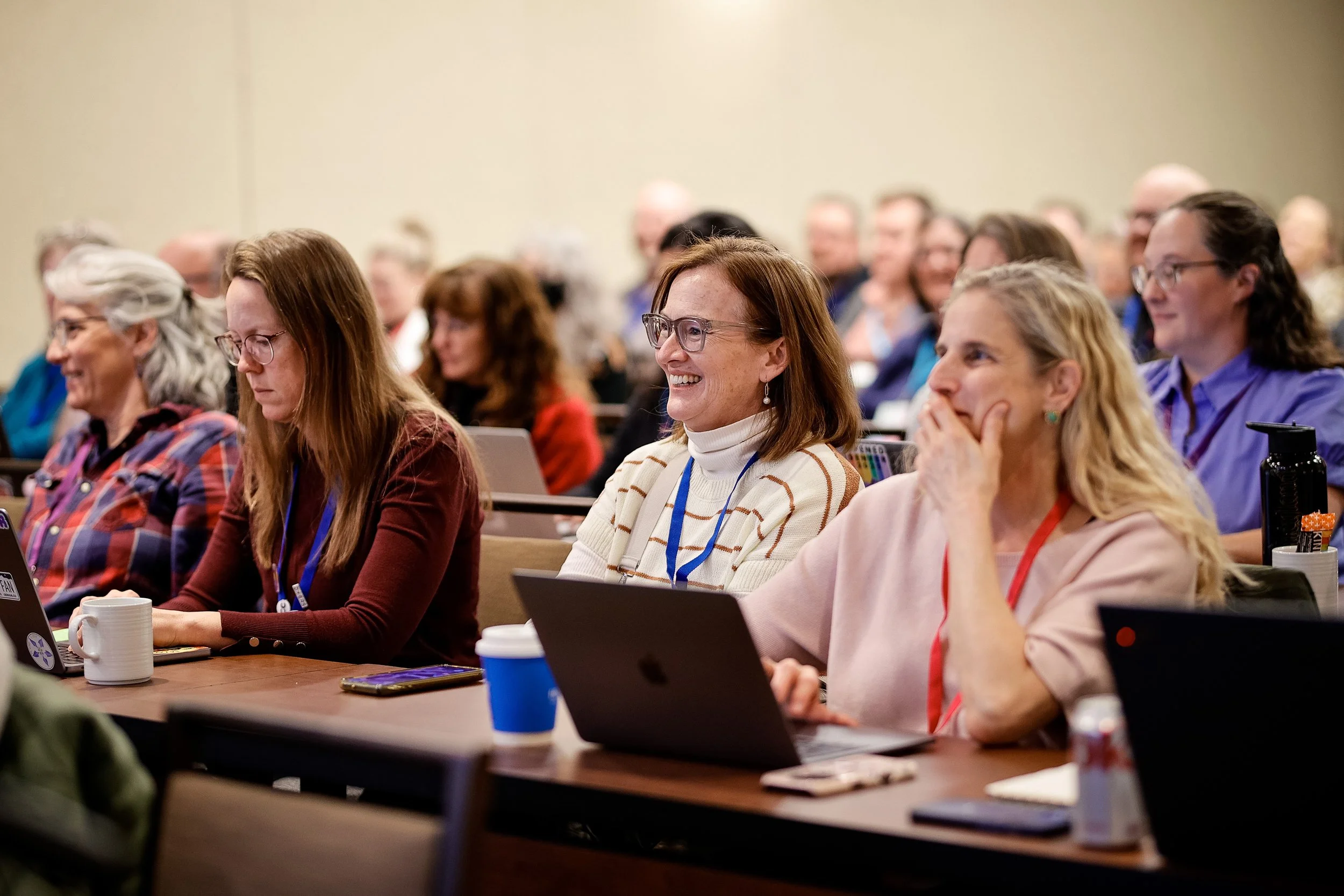
Open Education National Summit
November 10-12, 2026 • Chicago • Application-Only
About the National Summit
The Open Education National Summit is the culminating event of a field-wide, collaborative process to choose national priorities for open education advocacy. Held on November 10-12, 2026 in Chicago, the summit will bring together representatives from across the open education field to review input gathered throughout the fall, narrow down a final list of priorities, and begin building action plans for the future.
The summit is by application only, but the national priorities process is open to everyone. Read more about how to contribute.
Apply to be a Delegate
Attendees are called “delegates” because the idea is to represent a broad range of perspectives across states, institution types, and professional roles. Some seats have been allocated to specific states, systems, and organizations. The remainder of the seats will be filled through an open application process for which anyone is welcome to apply, including the opportunity to request travel funding if needed.
The general application deadline has passed, but we will continue to accept late submissions until September 25.
Frequently Asked Questions
-
Finalize a shared set of national priorities for open education based on input collected from across the field
Begin building concrete plans and commitments to advance those priorities over the next three years
Strengthen connections across the field and build shared direction for the work ahead
-
Participants in the summit are called “delegates” rather than attendees because they are charged with bringing perspectives from their network, community, or state, not only their own. Qualifications for delegates include:
Able to travel in-person to Chicago and participate for the entirety of the program
Engaged in work that connects to open education, either directly (practitioners, advocates) or indirectly (leadership/oversight roles within institutions doing open education work)
Conversant in basic open education and OER concepts and terminology (the meeting assumes delegates arrive already familiar with the topic)
Able to complete up to 5 hours of work pre- and post-summit (10 hours total), which may include readings, document review, and prep calls
Willing to be listed publicly as a delegate (exceptions allowed)
Note that the summit is not a traditional conference and carries an expectation of active engagement. You read the full role description here.
-
The summit aims to bring together a group of 100-150 delegates that can broadly represent the open education field. The number is capped both by the venue and the logistics of a working meeting.
Delegates are selected through three primary channels:
Delegates representing national and regional organizations that work on open education or related issues
Delegates representing state and system-level open education initiatives, determined by membership in DOERS
At-large delegates selected through an open application process, with travel scholarships available to expand representation
A small number of invitations is reserved for select leaders, experts, and VIPs, as well as Open Education Association steering committee members.
-
You can submit an application to attend the summit by completing this form. Applications are encouraged by September 14 or as early as possible for the best chance of an invitation.
You will receive an update on your application by September 25. Our response may fall into three categories:
Invitation: The invitation will specify logistical details and a deadline by which to confirm your participation.
Waitlist: If we are unable to confirm an invitation or travel funding, we may ask you to stay on the waitlist. As more delegates confirm, we will revisit the waitlist and offer an invitation if possible.
Decline: We may decline your application if we are unable to offer an invitation. Keep in mind that invitation decisions are made with respect to the confirmed delegate list and where greater balance is needed across dimensions such as states, sectors, and professional roles.
If you would like to nominate someone for an invitation, for example a senior leader at your institution, you may submit your nomination to contact@opened.org.
-
Visit the Summit Logistics page for more information. You can also reach out to contact@opened.org.
-
The summit begins Tuesday, November 10 at 2:00pm ET and concludes Thursday, November 12 at 12:00pm ET. Most of the meeting is spent in working sessions and small group discussions, and participants are required to be present for the full program.
The schedule is designed so that most people can arrive on the morning of the first day and depart on the afternoon of the third day, so only two nights away are required.
-
There is no cost to attend the summit other than the delegate’s own travel. Those who have received an invitation can visit the Summit Logistics page for more information.
-
The Open Education Association has budgeted funding to support travel scholarships to increase representation at the summit. You may apply for travel funding as part of the application process.
-
The summit is designed as a working meeting that will produce decisions and plans related to national priorities. Given that purpose, there are strict limitations on the size and design of the meeting, and an invitation process is the best way to ensure a nationally representative and committed audience. While we considered how we might design a meeting that includes virtual participation, we concluded that a meaningful virtual experience was not feasible.
Our goal was to design a process that is as open as possible: inviting input before the summit, engaging delegates to represent the field during the summit, and reporting the results out after the summit with an open call for action.
Sponsors